Microsoft Copilot changed who can see its answers, and the tools that report on it changed with it. This shortlist ranks five tools on what they can still observe in Copilot and its Bing surfaces, and pairs them with the citation data Microsoft publishes itself.
These picks apply to brands that want to see how the public, Bing-grounded Copilot surfaces mention and cite them, and that can read Bing Webmaster Tools for their own site. Since Copilot became sign-in only, the signed-in Copilot app is out of reach for third-party answer tracking, and vendor coverage is changing month to month.
Can You Still Track Microsoft Copilot Answers?
Third-party tracking of Microsoft Copilot answers broke in November 2026, when Semrush discontinued Copilot tracking on November 9 because Copilot's new access requirements stopped AI visibility platforms from collecting answers, and vendors such as Rankscale and Omnia moved their Copilot monitoring to Bing AI Mode.
The cause sits on Microsoft's side. Microsoft now requires sign-in for Copilot, and Krishna Madhavan, Principal Product Manager for Microsoft AI and Bing, said "Going forward we are requiring all Copilot users to login". The login covers copilot.microsoft.com and the Copilot button on Bing's home page. Michael Schechter, Microsoft's CVP of Search Growth and Experiences, said Copilot Search answers inside Bing Search do not require sign-in.
Semrush told its Enterprise AIO customers in an email on 28 October 2026 that tracking on other AI platforms is unaffected. Customers can return their Copilot prompts to their balance or keep their historical Copilot data.
Omnia, an AI visibility vendor outside this shortlist, stopped collecting Copilot answers on 9 November 2026 and replaced them with Bing AI Mode, which shows AI answers to everyone. Omnia says the Bing AI Mode history starts fresh and its numbers are not comparable to Copilot's. Past Copilot data stays available. Rankscale made the same switch a day earlier.
Bing AI Mode itself is new. Search Engine Roundtable reported in September 2026 that Microsoft was testing renaming the Copilot search tab in Bing Search as "AI Mode", and a later update quoted a third-party post saying Bing AI Mode appears fully rolled out.
For anyone working on AI search visibility, Copilot now has three layers a team can still observe:
- Public AI answers: Copilot Search and Bing AI Mode answers in Bing, which tools can query without signing in.
- First-party citation counts: Bing Webmaster Tools AI Performance, which reports how often Copilot and Bing cite your own pages.
- Bing-side signals: Bing clicks, the grounding queries behind citations and AI crawler visits to your site.
Vendor feature pages can lag behind these changes. Rankscale's Copilot feature page still describes Copilot tracking, while its changelog retired Copilot on 8 November 2026. Read a vendor's changelog before its feature page.
Which Copilot Does A Visibility Tool Track?
Microsoft runs three Copilot surfaces that a brand can appear in, and a visibility tool sees each one differently. They are the signed-in Copilot app, Copilot Search answers in Bing that need no sign-in, and Microsoft 365 Copilot Chat, where Copilot generates a short query based on your prompt and sends it to Bing.
Copilot surfaces and what a tool can observe
| Surface | Who Sees It | Sign-In | How It Reaches The Web | What A Tool Can Observe |
|---|---|---|---|---|
| Copilot app (web, Edge, mobile) | Microsoft account holders | Required | Search mode with clickable citations | No third-party answer capture |
| Copilot Search and Bing AI Mode | Anyone using Bing Search | Not required | AI answers inside Bing results | Answers, mentions and cited URLs |
| Microsoft 365 Copilot Chat | Work users | Work account | Short query sent to Bing | The Bing query and cited sources |
The Copilot app runs at copilot.microsoft.com, in Edge and in the iOS and Android apps. Microsoft added more prominent, clickable citations and a dedicated Search mode in November 2025, and a "Show all" option opens the full list of references. Since the sign-in change, this is the surface third-party trackers lost.
Copilot Search and Bing AI Mode sit inside Bing Search. Microsoft says these answers need no sign-in, which is why vendors such as Rankscale and Omnia moved their monitoring there. When a tool says it tracks "Copilot" after November 2026, this is usually the surface it reaches.
Microsoft 365 Copilot Chat is the work version. Microsoft's documentation says the full prompt or file is not used as the query unless it is already very short. The organization controls whether web search is on at all. A Sources button below each response shows the exact query Copilot sent to Bing and the sources it used.
No tool on this shortlist monitors Microsoft 365 Copilot answers. For work Copilot, the observable layer is the short query Copilot sends to Bing and the sources it shows under each response.
The practical rule is to ask every vendor which of the three surfaces it queries. A "Copilot" label on a feature page can mean the signed-in app before November, Bing AI Mode after it, or a crawler stat with no answer data at all.
Best Microsoft Copilot Visibility Tools
Ahrefs Brand Radar is the strongest Microsoft Copilot visibility tool on this shortlist because it still publishes a Copilot index of US queries, while Rankscale has moved its Copilot tracking to Bing AI Mode and Profound and Promptwatch do not list Copilot as a monitored answer engine.
Inclusion bar: A tool makes the list when it shows how a brand appears in Copilot or its Bing-side successor, through answers, citations or Bing signals.
Criteria: Copilot coverage as each vendor documents it in its changelog and product pages after the November change, what the tool measures, how it collects answers, what drives spend, and which team it fits.
Basis: Vendor documentation and changelogs, Microsoft documentation and independent reviews.
Limits: Vendor coverage changes fast, and the signed-in Copilot app is no longer observable by third-party tools.
- Ahrefs Brand RadarBest for market-level Copilot benchmarks
- RankscaleBest for own-prompt Bing tracking
- LLMrefsBest for keyword-level budget tracking
- PromptwatchBest for bing data plus content
- ProfoundBest for enterprise multi-engine programmes
The comparison below keeps each cell to what a buyer compares on. Detail on each tool sits in its own section.
Copilot coverage at a glance
| Tool | Copilot Coverage | Collection Method | Main Metrics | Best For |
|---|---|---|---|---|
| Ahrefs Brand Radar | Prebuilt US Copilot index | Monthly prompt index | Mentions, citations, share | Market-level Copilot benchmarks |
| Rankscale |
| Scheduled runs per term | Mentions, cited URLs, share | Own-prompt Bing tracking |
| LLMrefs | Copilot listed among engines | Keyword fan-out prompts | Share of voice, position | Keyword-level budget tracking |
| Promptwatch | Bing clicks, no Copilot engine | Prompts plus Bing data | Mentions, citations, sentiment | Bing data plus content |
| Profound | Not a tracked engine | Daily browser capture | Visibility, sentiment, citations | Enterprise multi-engine programmes |
Considered, not included
| Tool | Reason |
|---|---|
| Semrush Enterprise AIO | Discontinued Copilot tracking on 9 November 2026 |
| Otterly AI | Frequent in ranking lists, outside this five-tool shortlist |
| Scrunch | Frequent in ranking lists, outside this five-tool shortlist |
| SE Ranking | Frequent in ranking lists, outside this five-tool shortlist |
| Peec AI | Frequent in ranking lists, outside this five-tool shortlist |
| AIclicks | Frequent in ranking lists, outside this five-tool shortlist |
| Rankability | Frequent in ranking lists, outside this five-tool shortlist |
If one of these tools is already in your stack, check its engine picker for Copilot or Bing AI Mode before adding another tool.
Ahrefs Brand Radar
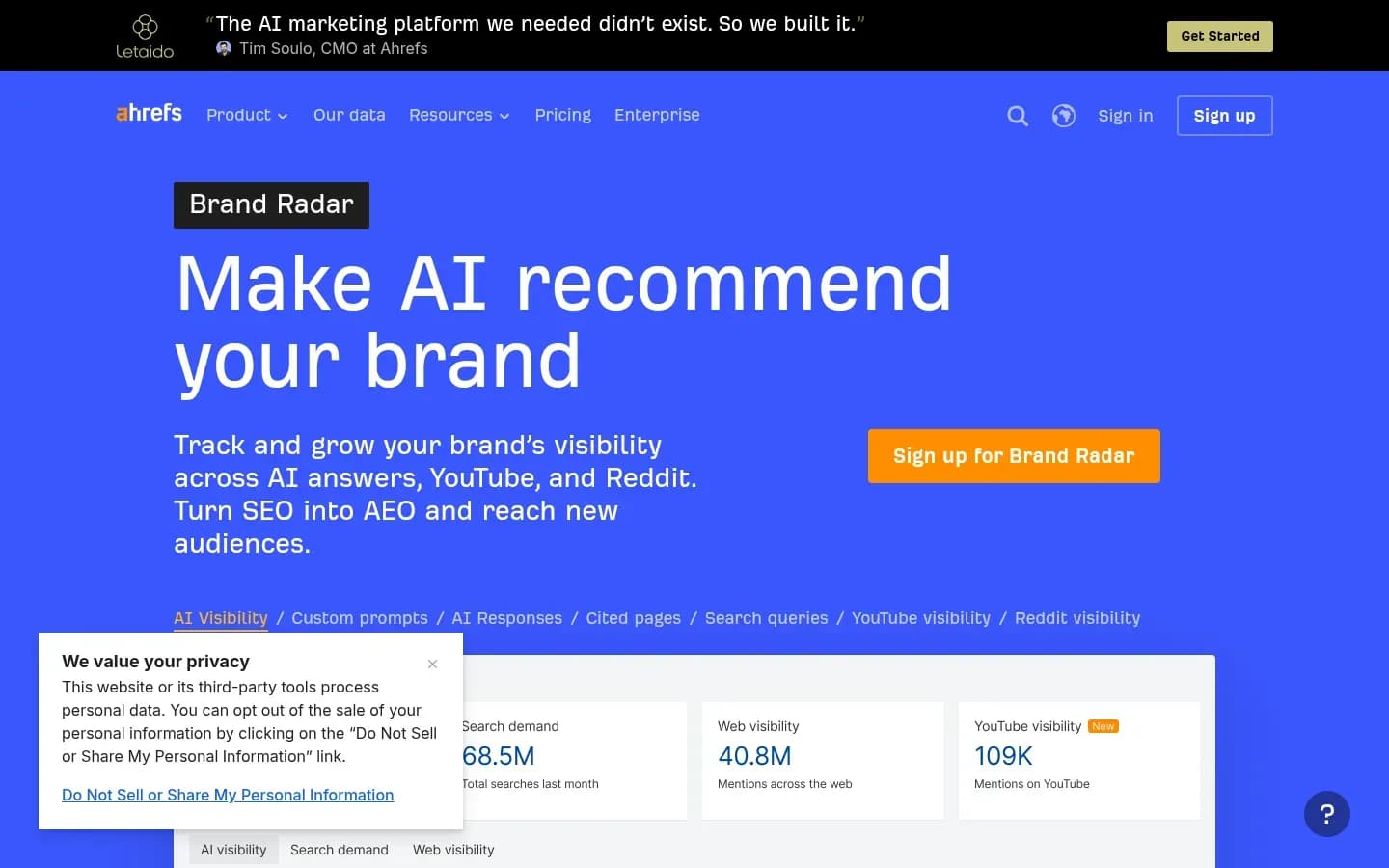
Ahrefs Brand Radar tracks Microsoft Copilot through a prebuilt index of search-backed prompts, and Ahrefs used it to analyse every domain Copilot cited across more than 3 million US queries for its November 2026 most-cited sites report.
Ahrefs Brand Radar
Ahrefs add-on that tracks a brand's visibility in AI answers (AI Overviews, ChatGPT, Perplexity, Gemini, Copilot), YouTube and Reddit, for marketers and SEO teams.
Ahrefs Brand Radar is an Ahrefs add-on that shows how a brand appears in AI answers. It combines a prebuilt index of prompts drawn from Ahrefs' keyword database with custom prompts you write yourself. It suits SEO teams who want AI visibility next to their existing Ahrefs data.
- Free plan
- No
- Public API
- Yes
Verdict: Ahrefs Brand Radar has the clearest live Copilot evidence on this list, and it answers market questions better than prompt-level ones.
Copilot coverage: Ahrefs added a Microsoft Copilot index to Brand Radar in July 2025, with 12M prompts from that month. Its November 2026 study of the 50 most-cited websites in Copilot drew on over 3 million US Copilot queries from Brand Radar, refreshed monthly.
What it tracks: Mentions, citations, AI Share of Voice and Estimated Impressions, which Ahrefs weights by search volume. The AI Visibility Index holds 592 million+ search-backed prompts, expanded through People Also Ask and semantic fan-out.
How answers are collected: The prebuilt index draws prompts from Ahrefs' keyword database, and Ahrefs says its prompt-based indexes update monthly. Custom Prompts are written by you and tracked daily, weekly or monthly per platform.
Real cost driver: Spend is metered in checks, which are prompts multiplied by platforms multiplied by check frequency. Overage is billed per check, and Brand Radar is sold as an add-on to Ahrefs, so a daily multi-platform custom prompt set grows the bill fastest.
Ahrefs Brand Radar pricing
| Plan | Price | Billing | Notes |
|---|---|---|---|
| Custom Prompts | $50 | per month | |
| AI Visibility Index | $199 | per month |
Ahrefs Brand Radar Custom prompts pricing
| Plan | Price | Billing | Notes |
|---|---|---|---|
| Custom prompt package Basic | $50 | per month | |
| Custom prompts (starts at) | $50 | per month | |
| Custom prompt package Growth | $100 | per month | |
| Custom prompt package Scale | $250 | per month | |
| Custom prompts, all models | $699 | per month |
Ahrefs Brand Radar AI Visibility Index pricing
| Plan | Price | Billing | Notes |
|---|---|---|---|
| AI Visibility Index | $199 | per month |
Best fit: SEO teams already on Ahrefs who want market-level Copilot benchmarks, such as which domains and competitors Copilot cites across a category.
Limitation: Ahrefs' AI Visibility Index page lists five indexes (AI Overviews, AI Mode, Gemini, ChatGPT and Perplexity), and Microsoft Copilot appears only in the "All platforms" plan feature list. Confirm Copilot appears in the platform filter of your plan before you buy. A prebuilt, monthly index also tells you how visible your market is, not what Copilot says for your exact prompts on a given day.
Rankscale
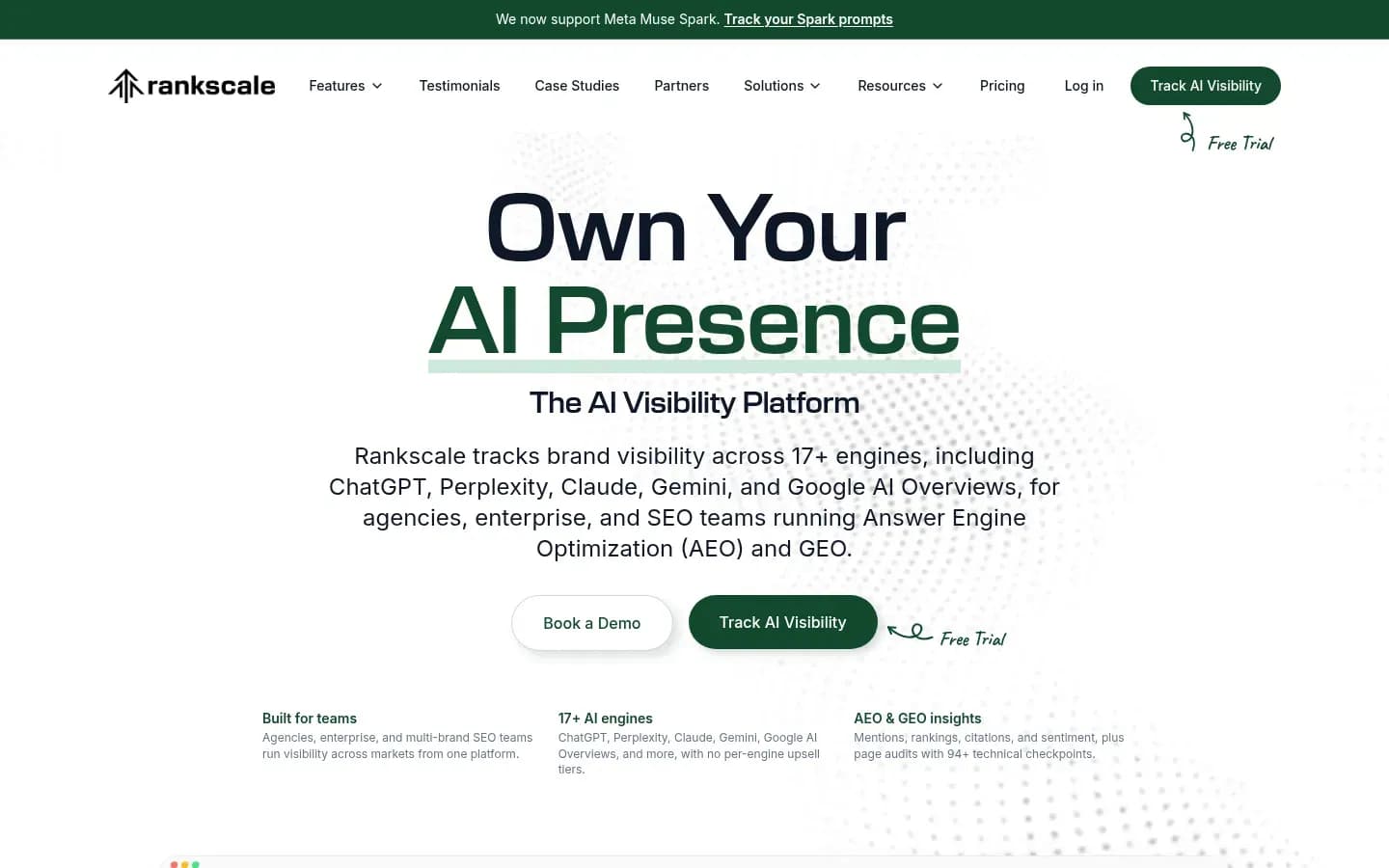
Rankscale retired Microsoft Copilot tracking on 8 November 2026 and replaced it with Bing AI Mode, which costs 0.25 credits per run, so it now tracks your own search terms on the public Bing AI surface rather than the signed-in Copilot app.
Rankscale
AI visibility platform that tracks brand mentions, rankings, citations and sentiment across AI engines, for agencies and enterprise SEO teams.
Rankscale is an AI visibility platform that tracks brand mentions, rankings, citations and sentiment across AI engines. You set your own search terms, schedules and regions, and pay for runs in credits. It serves agencies and SEO teams who want prompt-level control.
- Platforms
- Web
- Public API
- Yes
Verdict: Rankscale is the most direct way on this list to track your own terms on Bing's public AI answers, with Copilot history behind it.
Copilot coverage: The changelog entry of 8 November 2026 reads "Bing AI Mode is now available, Microsoft Copilot has been retired". Before that, Rankscale added Microsoft Copilot search query fan-out on 17 June 2026, which showed the web searches Copilot ran for a prompt. On 11 April 2026 it added shopping analysis across ChatGPT, Google AI Mode and Copilot. That history and fan-out context are why it ranks second.
What it tracks: Brand mentions, citations, which of your URLs get cited and where competitors win, share of voice and a visibility percentage per search term. Other engines include ChatGPT, Perplexity, Google AI Mode, Gemini and Claude.
How answers are collected: Scheduled runs per search term, set daily or weekly, with the region set per term.
Real cost driver: Each engine has its own credit cost per run, and runs with web search cost more. Bing AI Mode costs 0.25 credits per run, and the Pro+ plan includes 3,000 credits. Search terms stay active when credits run out and resume when credits replenish.
Rankscale pricing
| Plan | Price | Billing | Notes |
|---|---|---|---|
| Essentials | $17 | per month, billed annually | |
| Pro |
|
| |
| Pro+ |
|
| |
| Growth |
|
| |
| Enterprise |
|
| |
| Custom Plan | Custom pricing |
Best fit: Teams that want their own prompts tracked on the Bing-side surface on a tight, metered budget.
Limitation: The Copilot feature page still describes Copilot tracking although the changelog retired Copilot on 8 November 2026. Bing AI Mode history starts on that date, so Copilot trend lines end there and the new line is a separate series.
LLMrefs
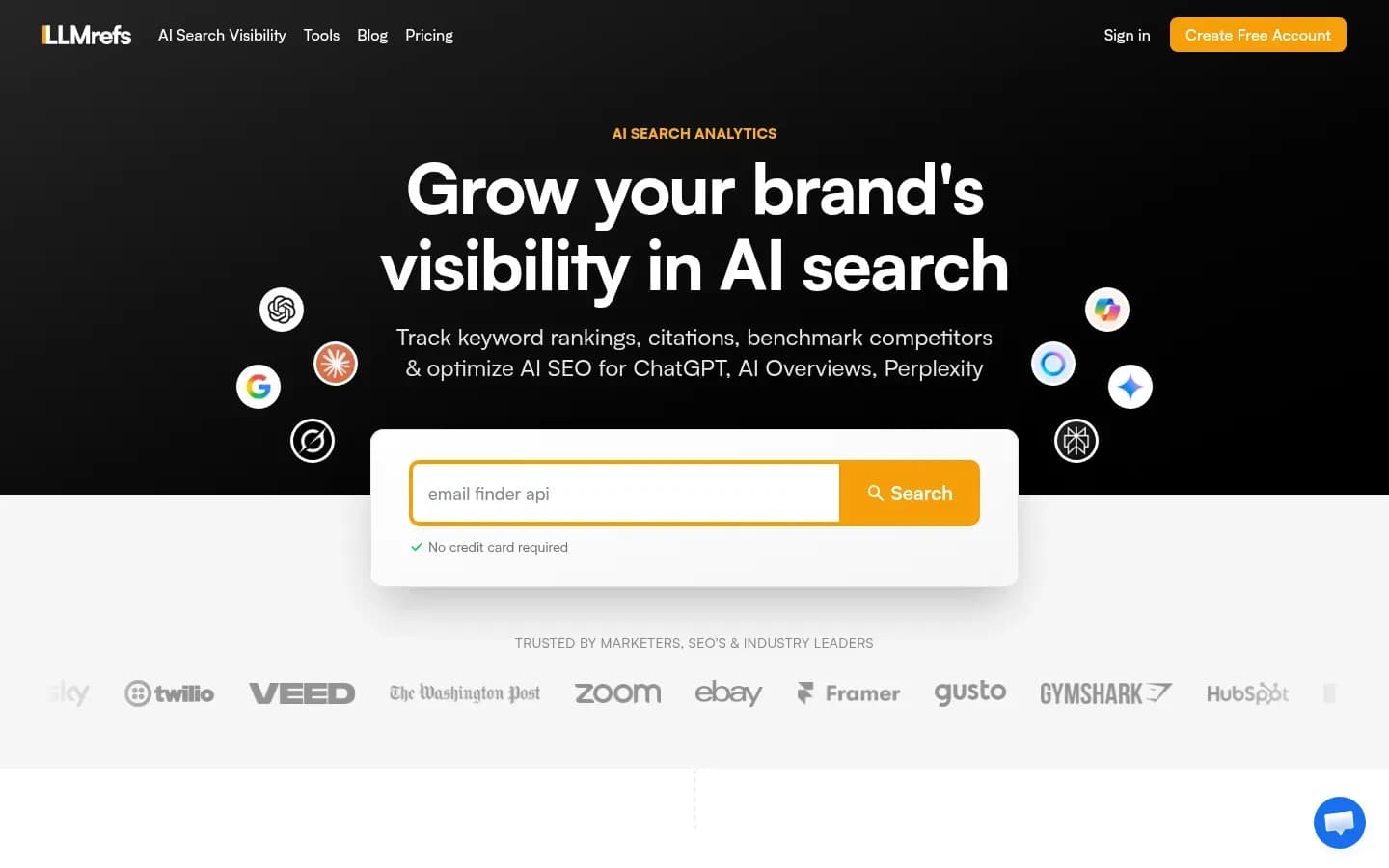
LLMrefs lists Microsoft Copilot among the AI engines in its keyword rankings view and reports share of voice and position aggregated and weighted across the fan-out prompts it generates for each keyword you track.
LLMrefs
AI search analytics platform that tracks how brands appear in ChatGPT, Google AI Overviews, Perplexity and Gemini, for brands, agencies and SEO teams.
LLMrefs is an AI search analytics platform built around keywords rather than single prompts. You add keywords, and LLMrefs generates the prompts and rolls the results into one score per keyword. It serves brands, agencies and SEO teams.
- Free plan
- Yes
- Free trial
- 7 days
- Public API
- Yes
Verdict: LLMrefs gives keyword-led teams one aggregated number per keyword, with Copilot listed in the engine set.
Copilot coverage: The homepage lists Microsoft Copilot in the keyword rankings view, with ChatGPT, Google AI Overview, AI Mode, Gemini, Perplexity, Claude, Grok, Meta AI and DeepSeek. Its own llms.txt index describes tracking across ChatGPT, Google AI Overviews, Perplexity, Claude and Gemini without naming Copilot, so ask for a Copilot sample run before committing.
What it tracks: Share of voice and position aggregated and weighted across every prompt, plus the source URLs AI answers cite.
How answers are collected: LLMrefs turns each tracked keyword into fan-out prompts, runs them and aggregates the results. Data exports to CSV.
Real cost driver: LLMrefs says its plans give access to all AI search engines with no additional fees, and agencies get unlimited team seats and client dashboards. Spend follows keywords, not engines.
LLMrefs pricing
| Plan | Price | Billing | Notes |
|---|---|---|---|
| All in One | $79 | per month |
Best fit: Small teams and agencies that think in keywords and want one aggregated Copilot number per keyword.
Limitation: Aggregating across fan-out prompts hides the single answer a buyer saw. Its pages also disagree on geo coverage, with 20+ countries and 10+ languages in the features section and 50+ countries and 20+ languages in the pricing section.
Promptwatch
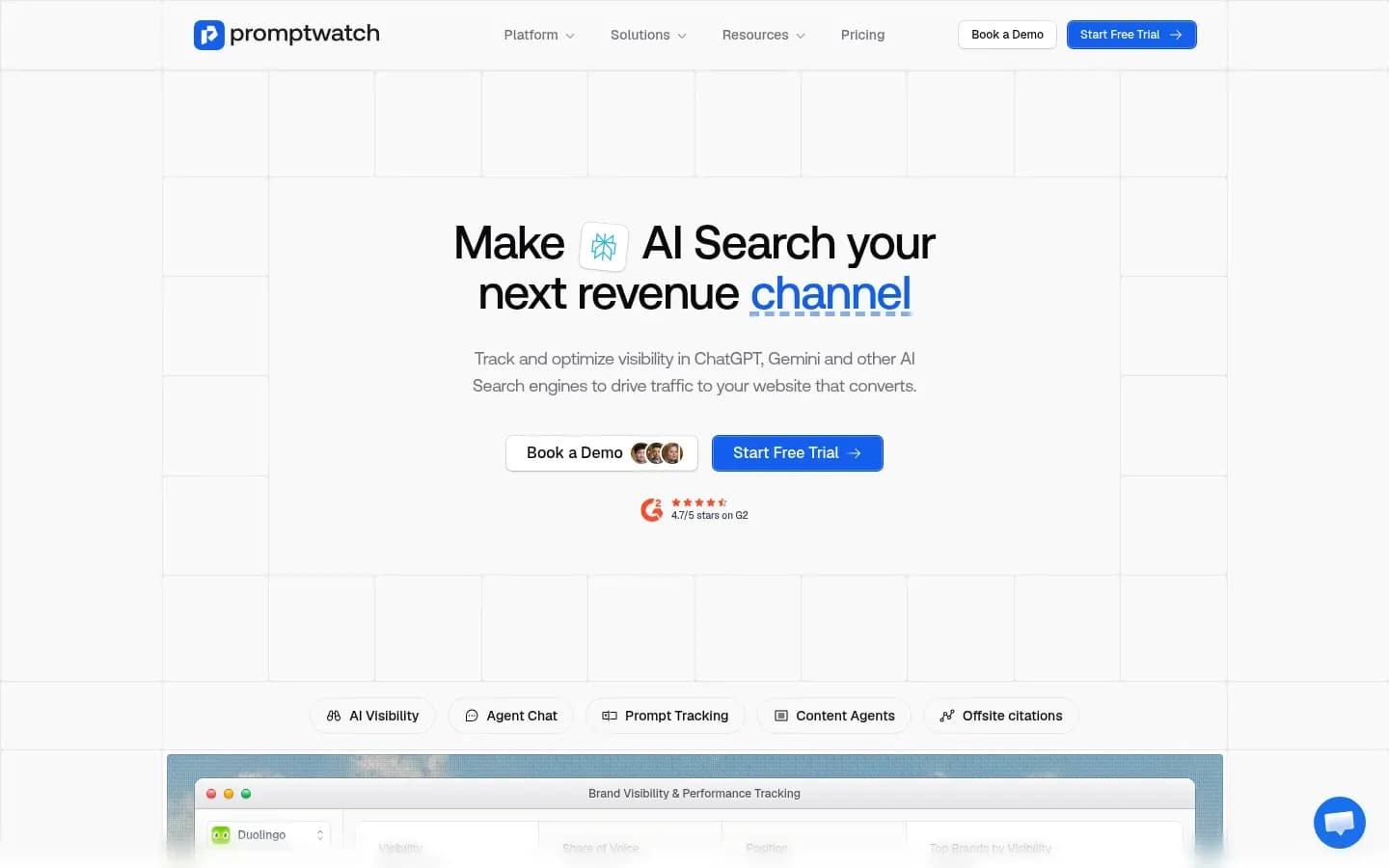
Promptwatch covers Microsoft Copilot from the Bing side rather than by monitoring Copilot answers, placing Bing clicks that include Copilot traffic next to AI citations through its Bing Webmaster Tools integration.
Promptwatch
AI search visibility platform that tracks how brands appear in AI answers and helps create content designed to be cited, for marketers, SEO teams and agencies.
Promptwatch is an AI search visibility platform that tracks how brands appear in AI answers and helps create content built to be cited. It joins answer tracking with search data, crawler logs and a content agent. It serves marketers, SEO teams and agencies.
- Free trial
- 7 days
- Platforms
- Chrome extension
- Public API
- Yes
- Compliance
- GDPR, ISO 27001
- Ratings
- G2 4.6/5 (22 reviews)
Verdict: Promptwatch is a Bing data and content tool for Copilot, not a Copilot answer tracker.
Copilot coverage: The homepage lists ChatGPT, Gemini, Claude, Perplexity, DeepSeek, Google AI Overviews and Grok as monitored engines. Microsoft Copilot appears only in its AI crawler visit stats. The Bing Webmaster Tools integration places Bing clicks, which include Copilot traffic, next to AI citations.
What it tracks: Mentions, citations, cited sources such as Reddit and YouTube, and sentiment. It turns Google Search Console and Bing queries into tracked prompts and reads crawler logs from Cloudflare, Fastly and Vercel. A content agent publishes to WordPress, Webflow and Framer.
How answers are collected: Tracked prompts run on the engines it monitors, and Bing data arrives through the Bing Webmaster Tools integration. Promptwatch can submit pages through IndexNow and flag pages changed since their last submission. Its November 2026 changelog added IndexNow submission with per-attempt tracking on 13 November, and agent chat answers about Insights pages, including Bing Webmaster, on 6 November.
Promptwatch pricing
| Plan | Price | Billing | Notes |
|---|---|---|---|
| Essential | $95 | per month | |
| Professional | $245 | per month | |
| Business | $579 | per month |
Best fit: Content teams who want Bing data, crawler logs and content production in one place while they track other engines.
Limitation: No Copilot answer monitoring. None of its November 2026 changelog entries names Microsoft Copilot as a tracked engine, so Copilot shows up as clicks and crawler visits, never as answers.
Profound
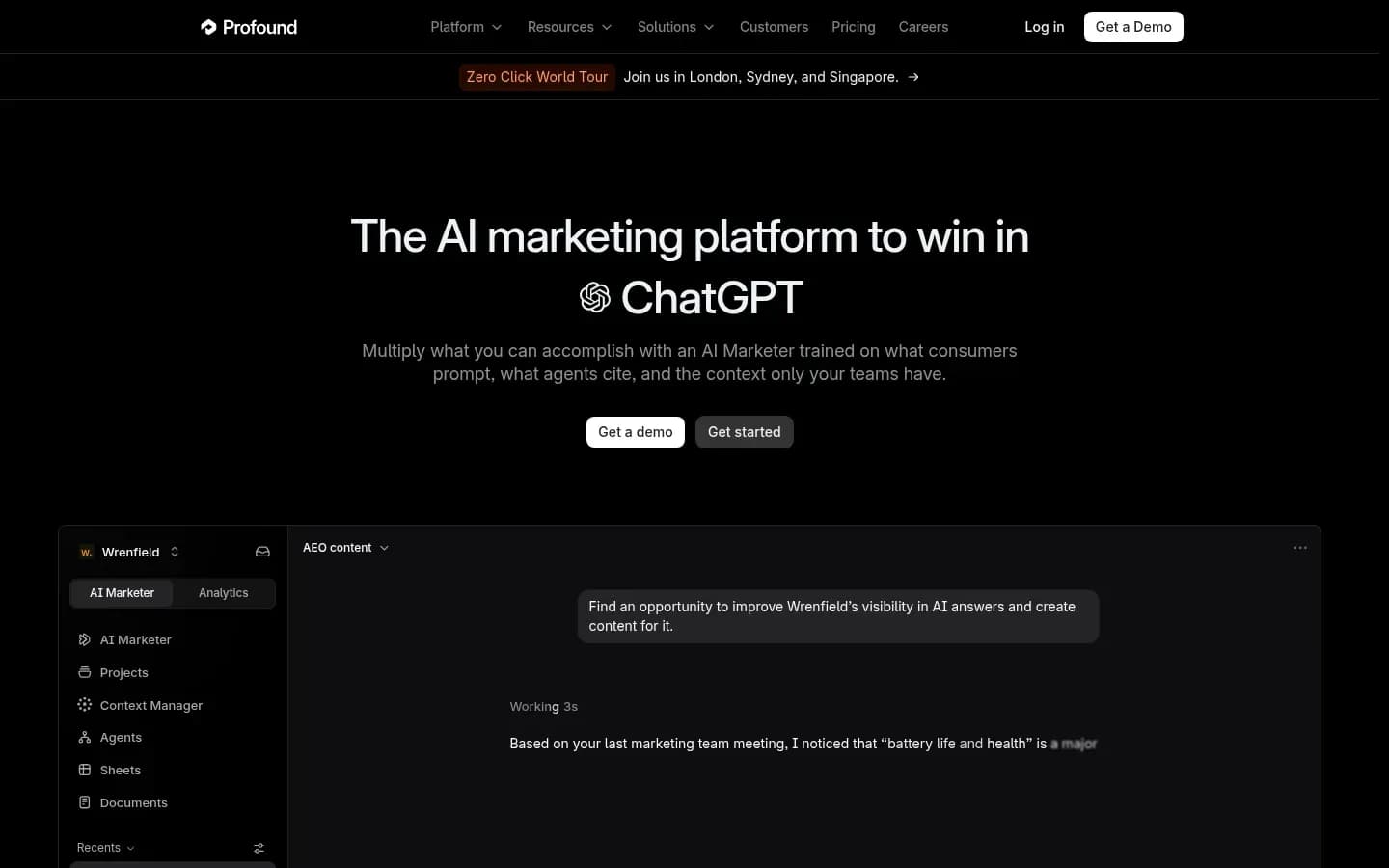
Profound tracks ten answer engines from the browser front end, including ChatGPT, Perplexity, Gemini and Google AI Mode, but its Answer Engine Insights does not list Microsoft Copilot or Bing among them.
Profound
AI marketing platform that shows marketing and AEO teams what customers ask AI tools and how their brand appears in the answers.
Profound is an AI marketing platform that shows what customers ask AI tools and how a brand appears in the answers. Its core audience is enterprise brands and large consumer companies.
- Free plan
- No
- Compliance
- SOC 2
- Ratings
- G2 4.5/5 (1,133 reviews)
Verdict: Profound tracks ten engines by front-end capture, with daily runs across 150+ regions, but it ranks last here because it covers neither Copilot answers nor, unlike Promptwatch, Bing-side data.
Copilot coverage: Answer Engine Insights tracks ChatGPT, Perplexity, Claude, Google AI Overviews, Google AI Mode, Gemini, Exa, Muse Spark, Qwen and DeepSeek. Its changelog added Exa on 4 September 2026 and Muse Spark on 6 November 2026, with no entry for Microsoft Copilot or Bing.
What it tracks: Visibility score, share of voice, sentiment, citation sources and competitor benchmarking. Conversation Explorer and Prompt Volumes draw on what Profound calls hundreds of millions of real, consented user conversations, updated weekly. Agent Analytics covers AI crawlers and bots plus AI-referred traffic and conversions.
How answers are collected: Profound captures the front-end experiences that normal users see from the browser rather than through APIs. It runs prompts daily and supports 30+ languages and 150+ regions.
Real cost driver: An AirOps roundup of G2, TrustRadius and Reddit reviews (AirOps is itself a vendor in this space) finds price is the most frequent complaint.
Profound pricing
| Plan | Price | Billing | Notes |
|---|---|---|---|
| Agency Enterprise (agency tab) | Custom pricing | ||
| Agency Growth (agency tab) | Custom pricing | ||
| Enterprise | Custom pricing | ||
| Trial | Custom pricing |
Best fit: Enterprise teams for whom Copilot is one engine among many, and who will pair Profound with Bing Webmaster Tools for the Copilot layer. For a deeper look, see Profound's fit, features and limitations.
Limitation: No Copilot coverage. The same AirOps roundup reports a steep learning curve, questions over data reliability and prompt-volume estimates, and recommendations that feel broad. Reviewers do praise its competitor and citation analysis, onboarding and support.
How To Use Bing Webmaster Tools For Copilot Citations
Bing Webmaster Tools AI Performance is Microsoft's own first-party citation report for Copilot, Bing AI summaries and select partner experiences, showing total citations, average cited pages, grounding queries and page-level citation counts. It reports on your own verified site, which makes it the baseline to read every tool on this shortlist against.
Microsoft opened the report in public preview on 10 February 2026. Average Cited Pages is the daily average of unique pages cited, and grounding queries are "the key phrases the AI used when retrieving content". A timeline shows citation activity over time. The announcement does not mention clicks or traffic.
On 16 June 2026 Microsoft added Intents, which classes grounding queries as informational, commercial or navigational, and Topics, which clusters them. It also added Compare, which overlays a previous period, and Citation Share, which does not expose competitor domains or traffic share. Citation Share is the percentage of citations attributed to your site out of all citations shown across all sites for a grounding query.
- Verify your site in Bing Webmaster Tools
- Open the AI Performance report and set the date range
- Export the grounding queries and the page-level citation counts
- Group grounding queries by Intents and Topics to see which buyer stages cite you
- Use Compare to overlay the previous period before reporting a change
- Map your top cited pages and note which ones carry most citations
- Join the export with a tool's answer data, Bing clicks or analytics
Treat Citation Share with care. It looks like share of voice, but it shows no competitor domains, no traffic share and no quality score. Join it with Bing clicks, which Promptwatch places next to AI citations, or with your analytics, rather than reading it as traffic. To keep those sources apart in one report, follow the steps to measure AI visibility without double-counting.
One published single-site case study shows what the data can look like. From 11 July to 8 October 2026, one site recorded 328,700 citations to 1,319 pages from 1,468 grounding searches. Of the top 154 grounding searches, 23 were non-English across 9 languages, accounting for 13.4% of citations in that list. These are one site's numbers, not a market benchmark.
How Does Microsoft Copilot Choose Its Sources?
Microsoft documents how sources are chosen in Microsoft 365 Copilot Chat. There, Copilot generates a short query based on your prompt and sends it to Bing rather than searching with the full prompt, and a Sources button below each response shows the exact query Copilot sent to Bing and the sources it used.
Microsoft's documentation adds that the full prompt or file is not used as the query unless it is already very short. The organization controls whether web search is on at all. In the consumer Copilot app, answers carry clickable citations, and "Show all" opens the full list of references. Bing Webmaster Tools then reports the grounding queries behind your own citations, the key phrases the AI used when retrieving content.
Grounding queries can be short. In one single-site case study, covering Copilot, Bing AI summaries and partner experiences in Bing Webmaster Tools, the median grounding search was 4 words, and only 8.4% of the top 154 grounding searches were phrased as questions. These are one site's numbers, not a rule for every Copilot surface.
That gives a team three things to check:
- Read the Sources button: In Microsoft 365 Copilot Chat, the Sources button shows the exact query and sources, which is the fastest way to see what Copilot searched for and which pages it used.
- Read grounding queries as a list: Export the grounding queries in Bing Webmaster Tools and compare their wording with the prompts you track in a visibility tool.
- Map cited pages to queries: Note which of your pages carry citations for which grounding queries, so changes to those pages can be tracked.
When Copilot cites a competitor's page instead of yours, the same diagnosis applies as for other engines. Work through the steps to investigate missing AI citations, starting with the Bing query Copilot sent.
Which Sites Does Microsoft Copilot Cite Most?
Amazon.com and walmart.com lead Microsoft Copilot's most-cited sites, and in Ahrefs' Brand Radar snapshot of over 3 million US Copilot queries for November 2026, amazon.com and walmart.com together took about 28% of the top-50 mention share, and Reddit did not make the top 50.
The figures are Ahrefs' own study on its own dataset, and the shares are of top-50 citations only. Amazon.com took 16.1%, walmart.com 11.8% and en.wikipedia.org 6.5%, so the top three held about 34.4%. YouTube came 13th at 1.8%, and no Microsoft-owned domain made the top 50.
Citations also concentrate inside a single site.
30.2%
One page took 30.2% of all citations in Bing Webmaster Tools AI Performance in a single-site case study, so one site's AI citations can hinge on a handful of URLs. It is one site's figure, not a market benchmark.
11 July to 8 October 2026 · 328,700 citations to one site in Bing Webmaster Tools AI Performance · Source
Decision rule: B2B brands are not competing with Amazon. They compete for a long tail of non-retail citations, so track your own cited pages and the competitors cited for your grounding queries rather than domain leaderboards. An AI citation gap report turns those competitor URLs into page actions.
How To Choose A Microsoft Copilot Visibility Tool
Choose a Microsoft Copilot visibility tool by its changelog rather than its feature page, because Rankscale's Copilot page still describes Copilot tracking even though its changelog retired Copilot on 8 November 2026 in favour of Bing AI Mode. Then check the surface it queries, its prompt source and what drives spend.
- Read the changelog for Copilot or Bing AI Mode entries after 9 November 2026, not only the feature page
- Ask which surface the tool queries, the signed-in Copilot app, Copilot Search and Bing AI Mode, or none
- Decide between a prebuilt prompt index and your own prompts, and check the refresh cadence
- Ask whether history breaks when an engine changes, and how old Copilot data is kept
- Find what drives spend, whether checks, credits or keywords
- Check whether the tool joins Bing Webmaster Tools data
Changelog first: Semrush's notice, Omnia's switch and Rankscale's 8 November entry all landed within days. A feature page that still says "Copilot" may describe a surface the vendor no longer reaches.
Surface: Since sign-in became mandatory, third parties can observe Copilot Search and Bing AI Mode, not the signed-in app. A tool that names neither is not tracking Copilot answers.
Prompt source and cadence: Ahrefs' prompt-based indexes update monthly, which suits market benchmarks. Rankscale schedules your own terms daily or weekly, which suits prompt-level monitoring.
History: Omnia says its Bing AI Mode numbers are not comparable to its Copilot numbers. Ask how a vendor labels the break in reports.
Spend: Ahrefs meters checks as prompts times platforms times frequency. Rankscale meters credits per run per engine. LLMrefs includes all engines and meters keywords.
Bing data: Promptwatch's Bing Webmaster Tools integration places Bing clicks next to AI citations. Other tools leave that join to you.
Expect scores to differ between tools even on the same brand, because each samples a different surface, prompt set and cadence. That is why AI visibility scores differ between platforms without either one being wrong.
Which Copilot Visibility Tool Should You Choose?
If you need Microsoft Copilot benchmarks across a market, choose Ahrefs Brand Radar; if you need your own prompts tracked on Bing's public AI answers, choose Rankscale; and every team should start with the free Copilot citation data in Bing Webmaster Tools. The picks below match each situation to a tool.
- Market-level Copilot benchmarks, already on Ahrefs: Choose Ahrefs Brand Radar. Its Copilot data covers over 3 million US queries and shows which domains Copilot cites across a category.
- Your own prompts on Bing's public AI surface, on a metered budget: Choose Rankscale. Bing AI Mode runs cost 0.25 credits each, and terms resume when credits replenish.
- Keyword-led small team or agency wanting all engines in one plan: Choose LLMrefs. It includes all AI search engines with no additional fees and reports one aggregated score per keyword.
- Content team wanting Bing clicks, crawler logs and content output: Choose Promptwatch. It joins Bing Webmaster Tools clicks with AI citations and publishes content through its agent.
- Enterprise multi-engine programme where Copilot is secondary: Choose Profound and pair it with Bing Webmaster Tools, since Profound's ten engines do not include Copilot or Bing.
- Any team, before buying: Start with Bing Webmaster Tools AI Performance. It shows total citations, cited pages and grounding queries for your own site across Copilot and Bing.
The rule behind every pick is the same. Decide whether you need market benchmarks or your own prompts, then confirm the tool reaches a Copilot surface that is still observable.
Frequently Asked Questions
Bing AI Mode is the AI answer tab in Bing Search, reported to be replacing the Copilot search tab, and unlike the Copilot app it shows AI answers without a Microsoft account sign-in. The answers below cover the Copilot questions buyers ask most.
Is Bing AI Mode the same as Microsoft Copilot?
No. Bing AI Mode is the AI answer tab in Bing Search, reported to be replacing the Copilot search tab, and it shows AI answers to everyone without sign-in. The Copilot app now needs a login. Vendors such as Omnia treat Bing AI Mode as a new engine whose numbers are not comparable to Copilot's.
Does Microsoft Copilot require a Microsoft account?
Yes, for the Copilot app. Microsoft now requires sign-in on copilot.microsoft.com and for the Copilot button on Bing's home page. Copilot Search answers inside Bing Search do not require sign-in, which is why visibility tools moved their Copilot monitoring to that surface after November 2026.
Does Microsoft 365 Copilot use Bing search?
Yes. Microsoft 365 Copilot Chat generates a short query from your prompt and sends it to Bing, and the full prompt or file is not used unless it is already very short. The organization decides whether web search is on, and a Sources button shows the exact query and sources.
Does Bing Webmaster Tools show competitors' Copilot citations?
No. Citation Share in Bing Webmaster Tools shows the percentage of citations attributed to your site for a grounding query, but it does not expose competitor domains, represent traffic share or score content quality. To see which competitors Copilot cites, pair it with a tool that tracks answers.
Sources
Sources
- Semrush drops Copilot from AI visibility tracking on November 9 · ppc.land
- Microsoft Forcing Copilot Users To Login But Not For Copilot Search Answers · seroundtable.com
- How web search works in Microsoft Copilot Chat and agents · support.microsoft.com
- seroundtable.com
- useomnia.com
- Introducing AI Performance in Bing Webmaster Tools Public Preview · blogs.bing.com
- New AI Visibility Insights in Bing Webmaster Tools: Intents, Topics, Citation Share, Compare · blogs.bing.com
- microsoft.com
- Microsoft Copilot Citations Study 2026: 328,700 Citations · lilachbullock.com
- ahrefs.com